
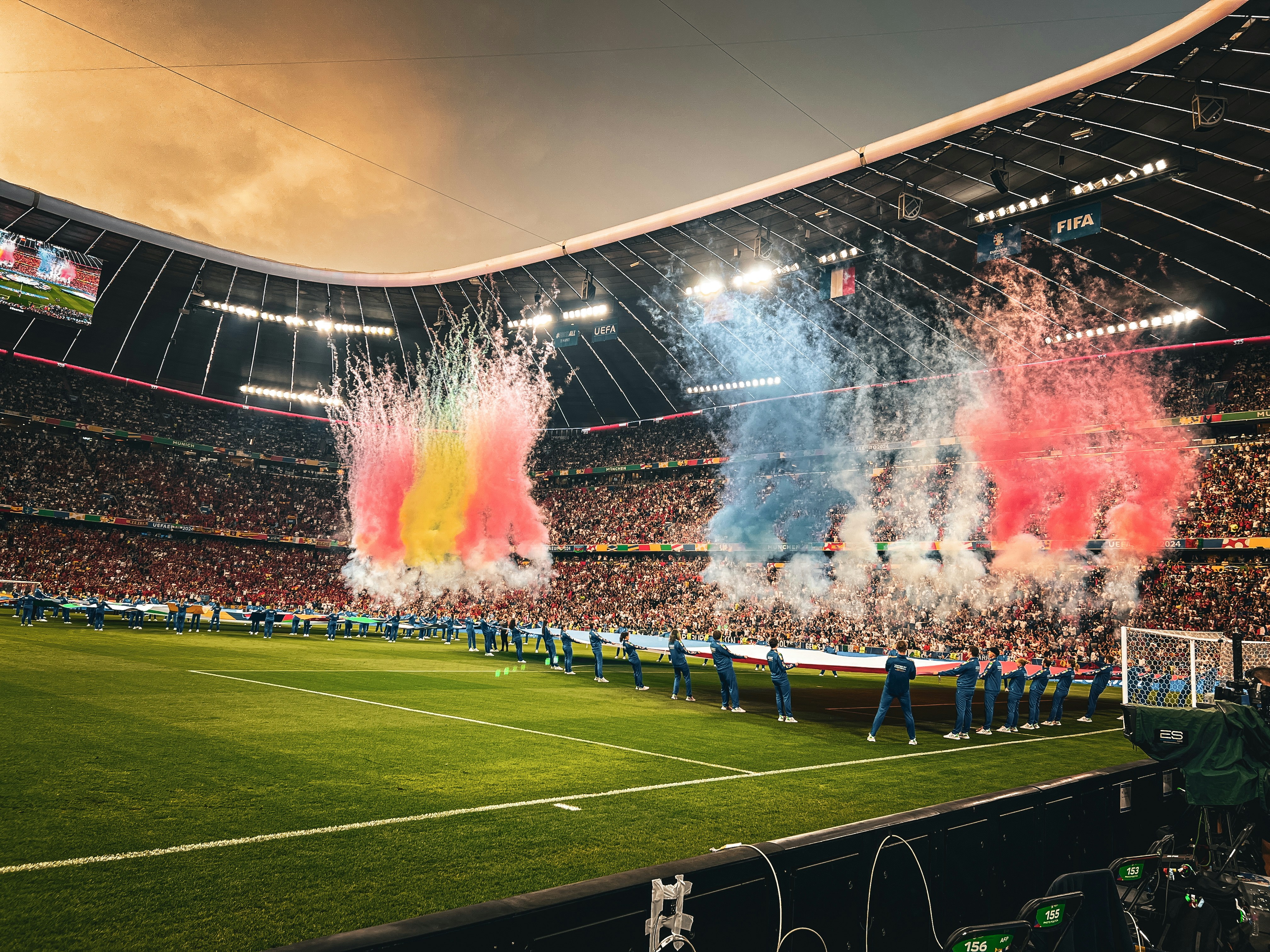
The 2026 World Cup kicks off on 11 June and runs through to the final on 19 July. For five weeks there’s a fixture most nights, and for anyone selling food, a tournament is the closest thing the calendar offers to a guaranteed demand spike. People order in to watch the game. They order more of it, later in the evening, and in bigger groups than usual.
That’s the good news. The bad news is that a demand spike you haven’t planned for isn’t a windfall — it’s a service failure waiting to happen. The orders you can’t make on time, the slots you oversold, the kitchen that’s still forty minutes behind when the final whistle blows: that’s how a busy night turns into a night of refunds and one-star reviews.
This post is about getting ahead of it. The World Cup is unusual because you know exactly when the rushes are coming, weeks in advance. That foreknowledge is worth using.
Why this tournament is different
Two things make 2026 different from a typical summer of trade.
The matches are in North America. The tournament is hosted across the United States, Canada and Mexico, which means that for UK viewers the kick-offs land in the evening and late into the night rather than at tea-time. A European tournament gives you a 5pm or 8pm UK kick-off and a tidy dinner rush. This one pushes a chunk of demand later — into the 8pm-to-midnight window and, for the latest fixtures, beyond it. If your kitchen normally winds down at 10pm, some of the biggest order volumes of the tournament will arrive after you’d usually have started cleaning down.
The fixtures are predictable, then they aren’t. The group stage is a known quantity — you can read the schedule weeks ahead and see which nights are busy. The knockout rounds are where it gets interesting: a home nation going deep into the tournament turns an ordinary Saturday into the busiest night of your year, and you find out the date only a few days in advance. The operators who do well are the ones who’ve already decided how they’ll respond, so that reacting is a matter of flipping a few settings rather than inventing a plan at 6pm.
Decide which nights you’re actually trading
Before touching any settings, look at the fixture list and mark it up. Not every match is a demand event for your business.
- Big draws — home nations, marquee teams, anything in prime evening kick-off slots. These are your peak nights. Plan them like a Friday.
- Secondary draws — neutral fixtures that still pull an audience, late kick-offs that catch the post-pub crowd.
- Quiet nights — matches with no local interest, or kick-offs so late they fall outside any sensible service window.
The point isn’t to trade flat out every night for five weeks — that’s a fast route to burning out your team before the knockouts. It’s to know in advance which nights warrant extra staff and tighter scheduling, and which are business as usual.
Set your prep times to tell the truth
The single most common failure on a busy night is a prep time that’s pure fiction. A 15-minute prep time is fine on a quiet Tuesday. On a match night with the kitchen at full tilt, it’s a promise you can’t keep — and every order that lands expecting food in fifteen minutes is a complaint in waiting.
Set a baseline prep time that reflects a normal evening, then have a plan to extend it as the kitchen fills up. Five-minute increments are usually enough; ten minutes during a sustained rush. The customer who’s told “45 minutes” and gets their food in 45 minutes is happy. The customer who’s told “15 minutes” and waits an hour is not, even though the kitchen did the same work. The number you quote is a promise, and on a match night it’s the promise you’re most likely to break.
If your platform lets you adjust prep times on the fly from a phone, make sure whoever’s running the pass knows how. The half-time lull is your moment to push the quote back out before the second-half orders land.
Throttle the slots, don’t just accept everything
Accepting more orders than the kitchen can make doesn’t get you more happy customers. It gets you the same number of meals produced and a longer queue of people waiting for them. Twelve orders crammed into a fifteen-minute window when you can comfortably make six doesn’t yield twelve happy customers — it yields six on time and six late.
Order throttling — a cap on how many orders can be accepted per time window — is what protects you here. Set it to what the kitchen can genuinely produce, not what you wish it could. The overflow gets pushed to the next available slot, which is exactly what you want: an order that arrives a bit later but correct and hot beats one that arrives on time but rushed and wrong.
A few specifics for tournament nights:
- Tighten throttling on the pre-match window. The thirty to sixty minutes before kick-off is when orders bunch up hardest, because everyone wants food on the table for the start. That’s the window most likely to blow past your kitchen’s capacity.
- Watch the half-time surge. People who didn’t order before the game order at the break. It’s a second, sharper spike against a kitchen that’s already worked through the first one.
- Don’t forget the final whistle. Late kick-offs mean some demand arrives after full time, when your team is tired and you’re closer to closing than you’d like. Decide in advance whether you’re trading that window or cutting it off.
Use cut-off times to protect your close
With late kick-offs, the question of when you stop accepting orders matters more than usual. An order that lands at 11:40pm for a kitchen that closes at midnight is not really an order you can fulfil well — it’s an ASAP order with no time left to make it.
A clear cut-off, set far enough before your actual close that the last order can be made properly, protects both your team and your ratings. It’s better to stop taking orders twenty minutes earlier than to take one you can’t deliver. The customer who’s told “we’re closed” is mildly disappointed. The customer who orders, waits, and gets a refund at midnight is angry — and writes about it.
Get the menu ready for the crowd
Match-night ordering skews towards sharing. Groups, platters, easy-to-eat food, drinks if you sell them. A few menu moves pay off:
- Feature the shareable stuff. Put platters, sides and group-friendly items where they’re easy to find. This is not the night to bury them under starters.
- Build a meal bundle or two. A set price for “feeds four” simplifies the decision for a group and lifts your average order value at the same time. People ordering for a room full of mates don’t want to assemble an order item by item.
- Pull anything slow. If a dish takes twenty minutes of dedicated attention to plate, it’s a liability on a night when the kitchen needs to move fast. Consider pausing your slowest items during peak windows so they don’t clog the pass. A platform that lets you toggle items off and on quickly makes this painless.
- Keep modifiers tight. A long list of optional extras slows ordering and slows the kitchen. Lead with the popular choices.
Have a plan for when you’re slammed anyway
Even with everything set well, a deep run by a home nation can hand you a night bigger than anything you planned for. That’s a good problem, but only if you’ve decided in advance how you’ll handle it.
The honest move is to pause new orders before service quality collapses, not after. Most platforms let you flip the site to “busy” or stop accepting ASAP orders entirely. Every “we’re too busy right now” loses a customer for one night. Every cold, late or wrong order loses them for good. When the kitchen is genuinely at the wall, turning orders away is the move that protects the business — and it’s a lot easier to do if you agreed the trigger beforehand instead of arguing about it mid-rush.
What to review the morning after
The tournament runs for five weeks, which means every match night is a rehearsal for the next one. A few numbers off your order list tell you what to change:
- How many orders went out late, and by how much? A pattern of ten-minute-plus lateness on the pre-match window means your throttling was too loose or your prep times too optimistic.
- How many slots filled and turned orders away? Some lost orders are healthy — they mean you protected service. A lot of them across the night means you were too tight, or you genuinely need more capacity.
- When did the spikes actually land? Pre-match, half-time, full-time — the shape varies by kick-off time and by how the game went. Knowing your real demand curve lets you staff and throttle the next big night better.
The teams who come out of a tournament ahead aren’t the ones who said yes to every order. They’re the ones who took the orders they could deliver well, turned away the ones they couldn’t, and used each match night to calibrate the next. The fixtures are on the wall weeks in advance. The only question is whether your settings are ready for them.