
When we started building our platform, we made a decision early on: if something didn’t work for real businesses, we weren’t going to include it. And if no one had built the right version of it yet, we’d take the time to do it ourselves.
Delivery zones are a perfect example.
We kept seeing the same problem. Tools offered radius-based delivery or basic postcode lists, which seemed fine on the surface. But once you looked closer, they fell apart. A radius doesn’t care about a river, or a hill, or a dual carriageway. A postcode can include both sides of a motorway. None of it matches how businesses actually operate.
So we stopped looking for a workaround and built our own delivery zone system instead.
A Better Way to Define Delivery
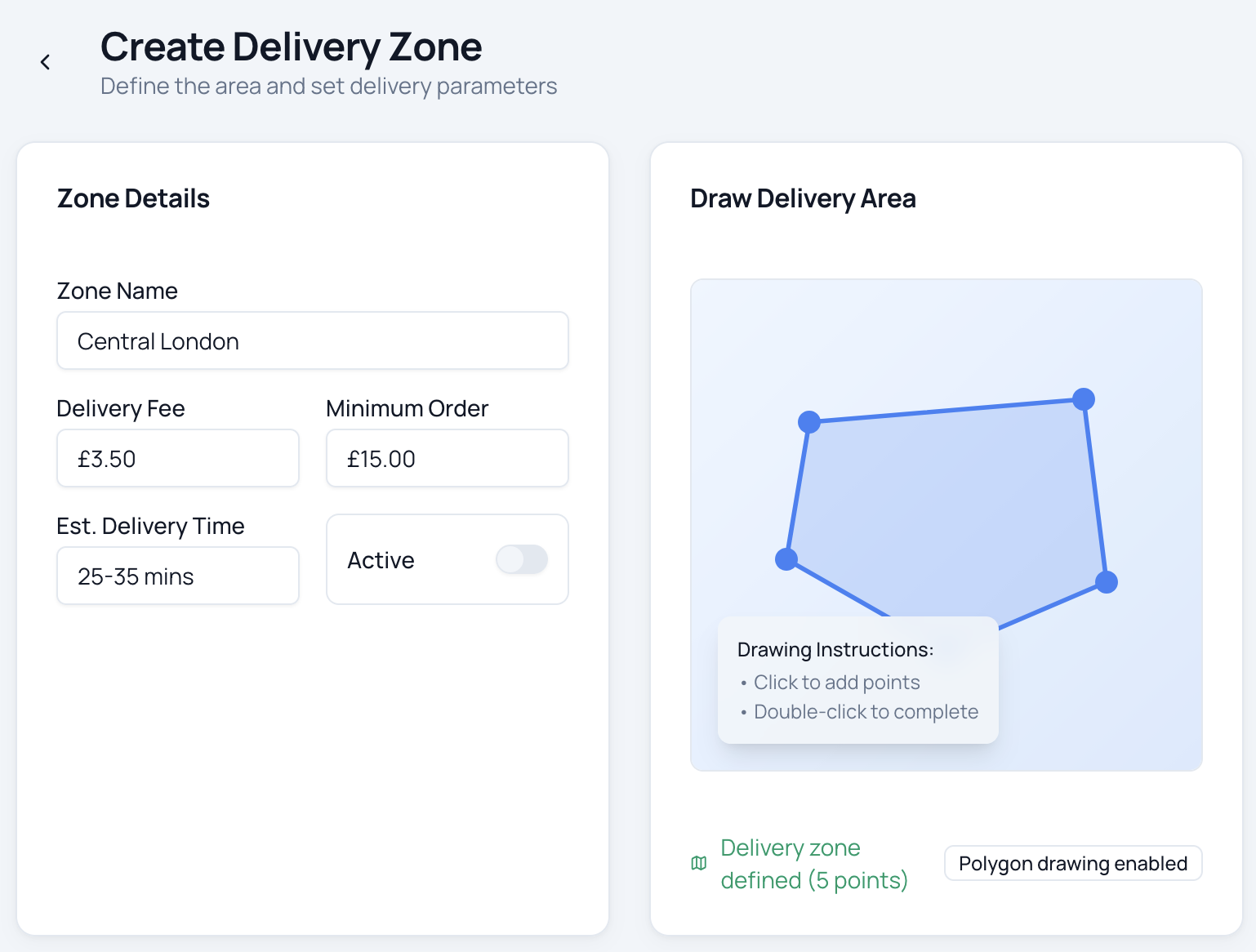
Our zone system is fully custom and built into the platform. You don’t upload lists or define mileage rules. You click on a map and draw polygons to create the exact areas you want to deliver to.
Each location can have multiple zones, and each zone is drawn as a custom polygon shape on the map. Want to follow the edge of town? Done. Want to skip a few streets with awkward access? Easy. Want to charge a different fee for a nearby area? Just create another zone and set its own delivery charge.
Each zone can have its own operating hours, or it can simply inherit the location’s hours. This gives you the flexibility to adapt your delivery coverage based on your capacity and demand.
We use Mapbox for the mapping engine because it’s reliable, fast, and accurate. It gives you beautiful visuals and responsive performance, even with complex zones. But the business logic behind it - how pricing works, how zones are prioritised, how we match customer addresses - is all ours.
Why We Bothered
This wasn’t just about nice UX. It was about solving a very real pain point. We’ve worked with independent food businesses, multi-site brands, and local delivery operators. They all had the same frustration: either the tools were too rigid, or too much manual effort was needed to keep things running.
Some were turning away orders they could have fulfilled. Others were accepting deliveries that ended up taking 30 minutes longer than they should have. Neither of those outcomes help a business grow.
What they needed was control.
So we gave them a way to design zones that reflect how they actually work—on their terms.
How Businesses Are Using It Right Now
One of the best parts of launching this feature has been seeing how businesses put it to work. A few examples:
Weekend expansion to nearby towns
A restaurant has a nearby town just outside their regular delivery area. They’ve created a separate zone for that town with operating hours set to weekends only, when they have more drivers available. This lets them capture additional customers during their busiest periods without overextending during the week.
Mid-week afternoon coverage boost
Another business expands their delivery coverage during mid-week afternoons by creating zones with specific operating hours. They can increase customer capture during slower periods while keeping their core zone tight during peak evening hours. Each zone has its own delivery charge, so they can price according to the distance and effort required.
Flexible pricing by zone
A neighbourhood takeaway offers free delivery within a small zone around their kitchen, and charges an additional £1.50 to deliver to surrounding areas. They’re able to reach more customers while keeping the books balanced, with each zone having its own custom delivery charge.
Time-Based Zone Control
Each zone you create can have its own operating hours, or it can inherit the location’s hours. This means you can set up zones that are only active during specific times - perfect for adapting to your capacity and demand patterns.
You might create a zone for a nearby town that’s only active on weekends when you have more drivers available. Or you could expand your coverage during mid-week afternoons to increase customer capture, then automatically shrink back to your core zone during peak evening hours.
The goal is to give you control without micromanagement. Set the rules once, and let the system handle the rest.
A Quick Look at the Customer Side
None of this would matter if it created friction for your customers. So the experience on their end is seamless.
When they enter an address, we instantly geolocate it to coordinates and check if it falls inside one of your zones. If it does, the correct delivery fee is applied to their cart. If not, we guide them to collection with a clear explanation.
For returning customers, it gets even better. They can create an account and save their delivery addresses. When they’re ready to order, they simply select from their saved addresses - and the system automatically shows only the addresses that match your delivery conditions at that moment. If a zone isn’t active right now, those addresses won’t appear. If it is, they’ll see the correct delivery charge right away.
No guesswork. No errors. Just a smooth checkout experience that reflects your real capabilities.
What This Says About Us
We didn’t build this feature to stand out. We built it because it was necessary.
That’s how we approach everything: we work closely with operators, we understand the problems, and then we build tools that solve them properly. Not half-measures, not workarounds, just good software that’s grounded in how businesses actually run.
If you’re in this space and you’ve ever wrestled with poor delivery tools or felt like your software was working against you, we’d love to show you what we’ve built. Or better yet, learn how we can make it even better.